
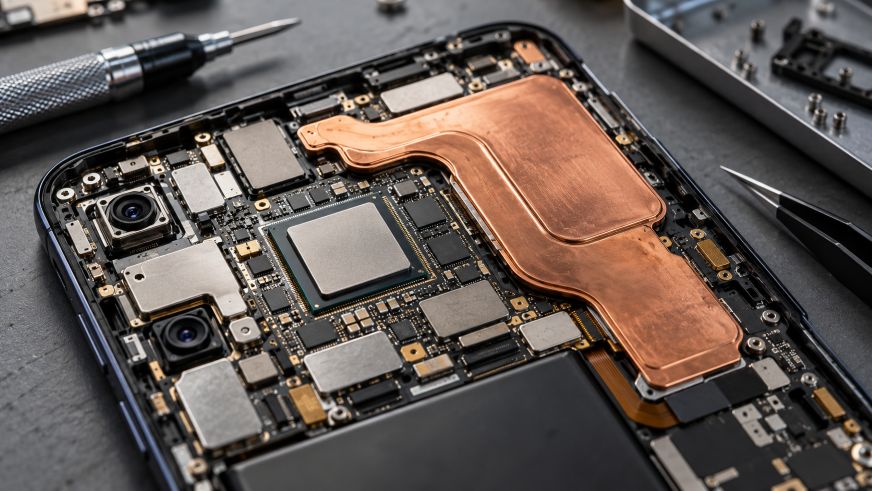
Mobile gaming performance depends on how consistently a smartphone handles demanding tasks over time. A powerful processor may deliver impressive results during short tests, but longer gaming sessions can reveal overheating, reduced frame rates, and battery limitations. Smooth gameplay requires several hardware and software components to work together. For players who regularly enjoy competitive or graphics-intensive games, sustained performance often matters more than a single headline specification.
Choosing a suitable device requires looking beyond promotional figures. Comparing smartphone specifications and reviews helps users understand differences in processors, memory, displays, and battery capacity. Technical comparisons explain what a device contains, while hands-on testing shows how those components perform during actual gameplay. Both approaches provide useful information, especially when comparing phones with similar prices or advertised capabilities.
1. Chipset and Graphics Performance: Where Gaming Speed Begins
The chipset acts as the processing center of a smartphone. It typically combines a central processing unit (CPU), graphics processing unit (GPU), and other components. The CPU manages game logic, calculations, and background operations. Meanwhile, the GPU handles visual elements such as lighting, textures, and complex scenes.
Qualcomm explains that modern mobile processors integrate several computing components to improve performance and power management. However, processor names and clock speeds alone cannot establish gaming capability. Architecture, graphics efficiency, and software optimization also influence results.
For demanding games, graphics performance deserves particular attention. A capable GPU can support detailed environments and higher frame rates, provided the game and device allow them.
Players should examine independent benchmarks alongside gameplay recordings. Consistent frame rates during demanding scenes are generally more informative than unusually high scores from short synthetic tests.
2. Thermal Management: Why Fast Phones Sometimes Slow Down
Heat is one of the biggest challenges during extended mobile gaming. Processors generate heat while handling demanding workloads. When internal temperatures rise, the device may reduce processing speeds to protect its components. This behavior is called thermal throttling.
Documentation from Android Developers confirms that thermal conditions can limit application performance. Devices cannot always maintain their highest processing speeds indefinitely.
Smartphone manufacturers use several cooling approaches, including graphite layers, heat pipes, and vapor chambers. Their effectiveness depends on the overall design, surrounding temperature, and workload.
A phone that performs well during a five-minute benchmark may behave differently after thirty minutes of gameplay. Reviewing sustained-performance tests helps identify devices that maintain smoother frame rates under prolonged demand.
3. Display and Touch Response: What Changes During Fast Gameplay?
A smartphone display affects how clearly and quickly players perceive movement. Refresh rate measures how often the screen updates each second. Common options include 60Hz, 90Hz, and 120Hz.
Higher refresh rates can make animations appear smoother when the game produces enough frames. However, a 120Hz display does not automatically mean every game runs at 120 frames per second.
Android Developers emphasizes frame pacing, which helps games present frames at consistent intervals. Uneven frame delivery can create visible stuttering even when average frame rates appear acceptable.
Touch response matters as well. Touch sampling rate describes how frequently the display checks for input. Faster sampling can reduce part of the delay between touching the screen and registering an action.
Competitive players should examine measured input latency, display brightness, and frame consistency rather than relying entirely on advertised refresh rates.
4. RAM Capacity: How Much Memory Does Gaming Require?
Random access memory, or RAM, temporarily stores information that applications need while running. Games use memory for active resources, while the operating system manages background processes and other tasks.
Insufficient available memory can lead to interruptions, slower application switching, or unexpected closures. Android Developers explains that Android may terminate less essential processes when memory pressure becomes excessive.
However, having more RAM does not guarantee higher gaming frame rates. Once a game has sufficient memory, its performance may depend more heavily on the processor, graphics hardware, and software.
Memory speed and management also deserve consideration. A balanced device with adequate RAM and efficient software may deliver better results than one advertising large memory capacity without equally capable processing hardware.
5. Battery Efficiency: More Than Just Capacity
Battery capacity is commonly measured in milliampere-hours (mAh). Larger batteries can support longer usage, but actual gaming endurance depends on several interacting factors.
Processor efficiency, screen brightness, wireless connectivity, and graphics settings all influence energy consumption. A phone with a larger battery may still require frequent charging if its components consume substantial power.
Guidance from Apple Developer highlights the importance of efficient graphics rendering and consistent frame rates. Similarly, Android Developers notes that higher display refresh rates can increase power consumption.
Players should compare battery-drain tests conducted under similar gaming conditions. Results become more useful when reviewers disclose brightness settings, frame-rate targets, and testing duration.
Charging speed also matters, although battery endurance and temperature control remain important during extended sessions.
6. Network Stability: Why Connection Quality Still Matters
Online multiplayer games depend on reliable communication between the smartphone and remote servers. Even powerful hardware cannot fully compensate for unstable network conditions.
Latency measures communication delay, while jitter describes variations in that delay. Packet loss occurs when transmitted information fails to reach its destination.
Cloudflare includes latency, jitter, and packet loss among the measurements used to evaluate internet quality for activities such as gaming.
Wi-Fi performance depends on signal strength, router quality, interference, and network congestion. Mobile data performance also varies with coverage and network conditions.
Players should therefore compare connection stability rather than focusing exclusively on maximum download speeds. Testing games over different networks can help determine whether interruptions originate from the phone, local connection, or game server.
How Should Players Compare Gaming Smartphones?
Understanding these six features provides a practical foundation for evaluating devices. However, specifications become more meaningful when supported by repeatable real-world testing. Different games place different demands on hardware, particularly those involving fast reactions, strategic decisions, and complex visual environments.
Exploring the cognitive benefits of video games also offers a broader perspective on how gaming activities engage attention, memory, and problem-solving skills. These considerations can help players evaluate smartphones based on their preferred gaming experiences rather than technical specifications alone.
Before selecting a smartphone, consider the following:
- Compare sustained frame rates rather than peak benchmark scores.
- Review temperature measurements from extended gaming sessions.
- Check whether preferred games support the display’s refresh rate.
- Assess RAM capacity against actual application requirements.
- Compare battery endurance using consistent testing conditions.
- Examine network reliability and input responsiveness during gameplay.
Independent reviews can help explain performance differences that specification sheets cannot fully capture. Testing methods should remain transparent so readers can judge whether results reflect their own gaming habits.
Conclusion: Consistency Defines a Better Gaming Experience
Smartphone gaming performance results from the interaction of processing power, cooling, display quality, memory, battery efficiency, and connectivity. No single feature determines the complete experience.
As mobile games become more demanding, balanced hardware and effective optimization will remain important. Players who consider sustained gameplay results alongside technical details can make more informed choices and avoid placing too much importance on impressive specifications that may offer limited practical benefits.